

Cart
0

How to Design a Lower-Stimulant Working Day Without Losing Productivity
You do not have to quit caffeine to stop being dependent on it. This piece lays out how to design a working day that stays productive on less stimulant, by building in the non-caffeine levers that genuinely move alertness and focus and using caffeine strategically rather than reflexively. It covers the sleep foundation that dwarfs everything else, the breaks and short walks that restore attention on their own, how to handle the afternoon dip with a nap or daylight instead of a late coffee, and the smart way to time and pair the caffeine you do keep. The payoff is more productivity, less dependence, and caffeine that works better because you need it less.

Caffeine Tolerance: Why the Same Dose Stops Feeling Effective
The cup that once jolted you awake now barely registers, and that fading is not your imagination. It is caffeine tolerance, a specific and well-documented adaptation: faced with chronic blockade of its adenosine receptors, the brain builds more of them, so the familiar dose now fights a stronger opposing signal and delivers less. This piece explains the receptor-upregulation mechanism, the human tolerance and withdrawal evidence, and the uncomfortable possibility that a heavy user's daily coffee is mostly reversing overnight withdrawal rather than lifting them above baseline. It ends with what actually works: not bigger doses, but keeping intake low and resetting sensitivity with a break.

How Late Is Too Late for Caffeine? Half-Life and Sleep Explained
"No caffeine after 2pm" sounds like settled advice, but the honest answer to how late is too late depends on three things that vary hugely between people: how long caffeine lingers, how fast you clear it, and how sensitive your sleep is. This piece makes the vague rule precise. It explains caffeine's roughly five-hour half-life and why an afternoon coffee is still with you at bedtime, why residual caffeine attacks deep sleep, and what the timing experiments show, including that dose matters far more than most people realize. It ends with a practical way to reason to your own cutoff instead of borrowing someone else's.

Caffeine and L-Theanine: Does the Combination Really Improve Attention?
Caffeine plus L-theanine is the nootropic pairing closest to consensus, sold as caffeine's focus without the jitters. But does the combination really improve attention, and how much of that is the theanine? This piece works through the controlled evidence and the meta-analyses, which do support a modest attention benefit in the first hour or two, and then delivers the nuance the marketing skips: most of the benefit comes from the caffeine, theanine alone does little for cognition and can even blunt caffeine at some doses, and its real job is smoothing caffeine's arousal so the focus feels steadier. Useful, then, but for the right reason.

Caffeine Versus Stimulant-Free Nootropics: What Each Approach Can and Cannot Do
The caffeine debate usually collapses into miracle versus crutch, and both caricatures miss the point. Caffeine and stimulant-free nootropics are not competitors; they are different tools for different problems. This piece maps what each can genuinely do and what it cannot: caffeine's fast, reliable lift in alertness against its tolerance, sleep cost, and inability to build anything lasting, set against the slower, gentler, sometimes cumulative support of theanine, Bacopa, citicoline, and tyrosine that will not rescue a tired afternoon on demand. It closes with how to choose between them, and how the caffeine and L-theanine pairing shows the two approaches can complement rather than compete.

Why More Neurotransmitter Precursors Do Not Automatically Mean Better Results
The logic behind most precursor supplements is seductive: a neurotransmitter helps, its precursor builds it, so more precursor must help more. This piece explains why that reasoning fails. The brain's neurotransmitter systems are regulated, not passive assembly lines, governed by rate-limiting enzymes that feedback-inhibit themselves, autoreceptors and reuptake that buffer output, and inverted-U dose-responses where too much is as bad as too little. Drawing on the biochemistry of tyrosine, choline, and serotonin, it shows why precursor loading has real but strictly conditional and bounded effects, why more can actually be worse, and why treating the brain like a tank to be filled misunderstands how it works.
Choose your formula
Two formulas. One standard.
Both precisely dosed and fully disclosed, made to the same standard. Start with the one that fits today, or take both.
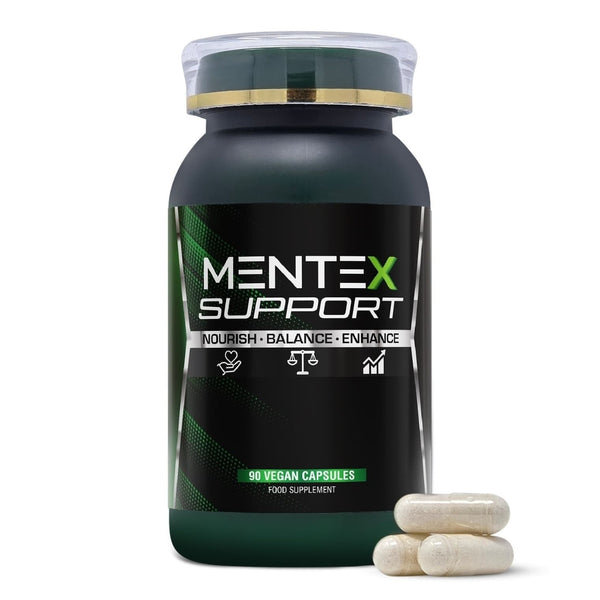
Support
Cognitive performance
11 standardised nootropic actives. Stim-free. Built for focus, recall and mental stamina.
- Focus and clarity, without the jitters
- Memory, recall and faster learning
- Calm, caffeine-free mental energy
£39.99
Explore Support
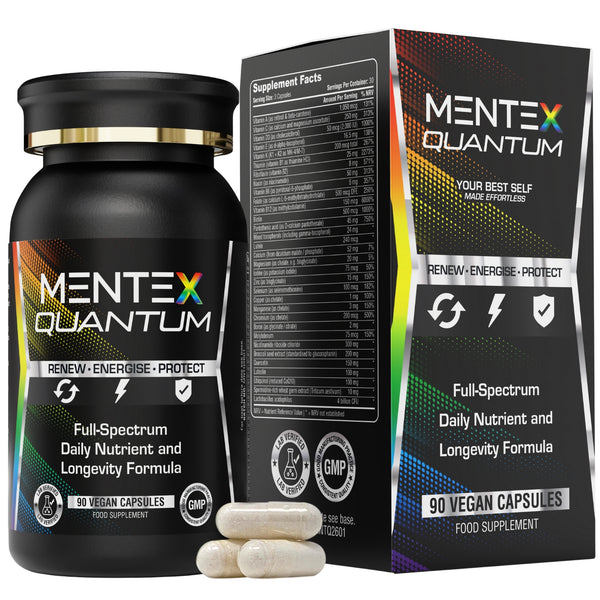
Quantum
Daily nutrition
A comprehensive multivitamin plus specialist compounds. 32 actives for a complete daily foundation.
- Energy and everyday vitality
- Immune and cellular support
- Complete daily nutrition, precisely dosed
£29.99
Explore Quantum