Cart
0
Active Methylated Forms · Bioavailable · No Conversion Required
Vitamin B6 · Vitamin B9 · Vitamin B12
P5P 5 mg (357% NRV) · 5-MTHF 400 mcg (200% NRV) · Methylcobalamin 10 mcg (400% NRV)
Three B vitamins supplied in their active, methylated forms, the versions the brain can use immediately, without requiring conversion by the body.
Control
Regeneration
Energy
protection
Vitamin B6
Pyridoxal-5-Phosphate
P5P · Active Coenzyme Form
5 mg
357% NRV
P5P is the active coenzyme form of B6, the form that directly participates in
over 100 enzymatic reactions including neurotransmitter synthesis (serotonin,
dopamine, GABA) and homocysteine metabolism. Standard pyridoxine HCl must be
converted to P5P in the liver first.
Vitamin B9
5-Methyltetrahydrofolate
5-MTHF · Methylated Folate
400 mcg
200% NRV
5-MTHF is the biologically active form of folate found in the bloodstream and
delivered to cells. Folic acid, used in most supplements, requires the MTHFR
enzyme to convert it, which is impaired in up to 40% of people due to common
genetic variants.
Vitamin B12
Methylcobalamin
Methyl-B12 · Active Form
10 mcg
400% NRV
Methylcobalamin is the neurologically active form of B12 that crosses the
blood-brain barrier more readily than cyanocobalamin. It directly supports
myelin sheath synthesis, homocysteine reduction and neuronal regeneration
without requiring hepatic conversion.
This B-vitamin trio targets homocysteine, the amino acid linked to accelerated brain ageing, while supporting every major pathway of brain chemical synthesis and neural health.
Homocysteine and brain health: Elevated homocysteine is one of the most well-established and modifiable risk factors for cognitive decline and brain atrophy. B6, B9 and B12 work together as a synergistic trio to metabolise homocysteine back into beneficial compounds, with each vitamin playing an essential and non-interchangeable role in the pathway.
Why forms matter enormously here: Because this trio works through a biochemical conversion pathway, using inactive forms introduces a conversion bottleneck at every step. Using P5P, 5-MTHF and Methylcobalamin removes those bottlenecks entirely, ensuring the pathway runs efficiently regardless of an individual's genetic profile.
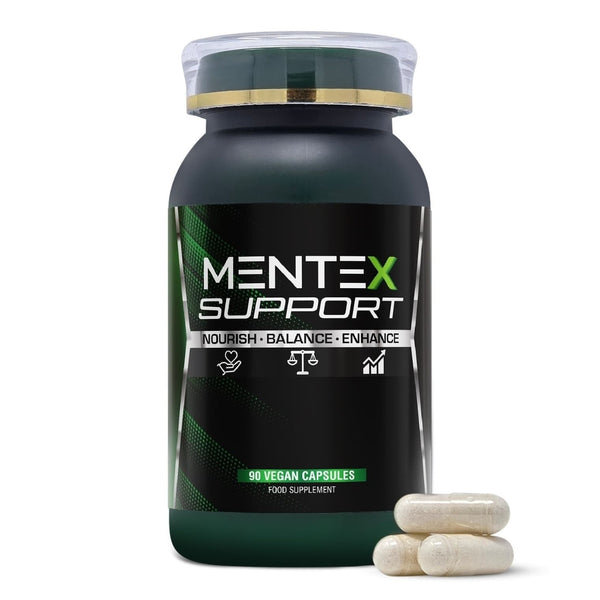
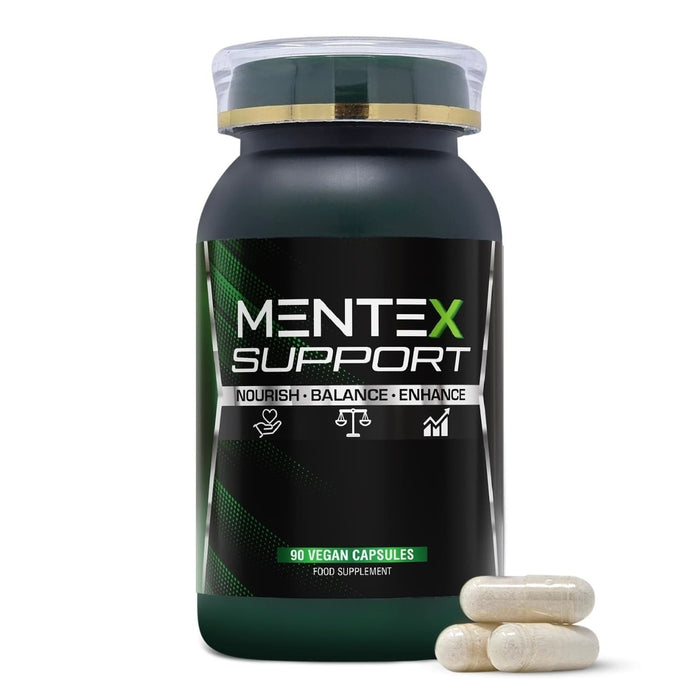
How it fits the formula: Within Mentex Support, the B-vitamin trio provides the methylation and vascular health layer of the formula. It works synergistically with Citicoline and Phosphatidylserine to support the phospholipid synthesis and one-carbon metabolism pathways critical for long-term brain cell health.
357%
B6 NRV (P5P)
200%
B9 NRV (5-MTHF)
400%
B12 NRV (Methylcobalamin)
3/3
Active methylated forms
Beyond Homocysteine, Additional Brain Health Support
- Neurotransmitter synthesis: B6 (P5P) is a required cofactor for the synthesis of serotonin, dopamine and GABA, the brain's primary mood, motivation and calming neurotransmitters.
- Myelin sheath maintenance: Methylcobalamin is essential for the synthesis and repair of myelin, the protective fatty sheath surrounding nerve fibres that maintains signal transmission speed and accuracy.
- SAMe production: 5-MTHF and Methylcobalamin both feed the methylation cycle that produces S-adenosylmethionine (SAMe), a mood-supporting compound involved in over 200 biochemical reactions in the brain.
- Brain energy metabolism: All three B vitamins act as coenzymes in mitochondrial energy production, supporting the ATP synthesis that powers neural activity and sustains mental performance throughout the day.
- MTHFR compatibility: Up to 40% of people carry MTHFR gene variants that impair folic acid and cyanocobalamin conversion. Using 5-MTHF and Methylcobalamin means Mentex Support works effectively for everyone, not just those without genetic variants.
Active methylated B-vitamin forms bypass conversion requirements for full bioavailability regardless of individual genetic profile.
Clinical Research
In the Oxford VITACOG trial, a double-blind, placebo-controlled study in 168 older adults with mild cognitive impairment, two years of B6, B9 and B12 together lowered homocysteine and slowed the rate of brain shrinkage to 0.76% per year versus 1.08% on placebo (p=0.001), a roughly 30% reduction. The effect was strongest in those who started with the highest homocysteine. Read the full paper here:
View B-Vitamin Brain Atrophy Trial (Open Access)
Further research
- Agnew-Blais JC, et al. Folate, vitamin B-6, and vitamin B-12 intake and mild cognitive impairment and probable dementia in the Women's Health Initiative Memory Study. J Acad Nutr Diet. 2015;115(2):231-41.
- Bottiglieri T. Folate, vitamin B12, and S-adenosylmethionine. Psychiatr Clin North Am. 2013;36(1):1-13.
- Hutto BR. Folate and cobalamin in psychiatric illness. Compr Psychiatry. 1997;38(6):305-14.
- Reynolds E. Vitamin B12, folic acid, and the nervous system. Lancet Neurol. 2006;5(11):949-960.
- Leahy LG. Vitamin B supplementation: what's the right choice for your patients? J Psychosoc Nurs Ment Health Serv. 2017;55(7):7-11.
- De Jager CA, et al. Cognitive and clinical outcomes of homocysteine-lowering B-vitamin treatment in mild cognitive impairment: a randomized controlled trial. Int J Geriatr Psychiatry. 2012;27(6):592-600.
- Selhub J, et al. B vitamins, homocysteine, and neurocognitive function in the elderly. Am J Clin Nutr. 2000;71(2):614S-620S.
- Smith AD, Refsum H. Homocysteine, B vitamins, and cognitive impairment. Annu Rev Nutr. 2016;36:211-39.
- Kennedy DO. B vitamins and the brain: mechanisms, dose and efficacy: a review. Nutrients. 2016;8(2):68.