

Cart
0

How Late Is Too Late for Caffeine? Half-Life and Sleep Explained
"No caffeine after 2pm" sounds like settled advice, but the honest answer to how late is too late depends on three things that vary hugely between people: how long caffeine lingers, how fast you clear it, and how sensitive your sleep is. This piece makes the vague rule precise. It explains caffeine's roughly five-hour half-life and why an afternoon coffee is still with you at bedtime, why residual caffeine attacks deep sleep, and what the timing experiments show, including that dose matters far more than most people realize. It ends with a practical way to reason to your own cutoff instead of borrowing someone else's.

Caffeine Versus Stimulant-Free Nootropics: What Each Approach Can and Cannot Do
The caffeine debate usually collapses into miracle versus crutch, and both caricatures miss the point. Caffeine and stimulant-free nootropics are not competitors; they are different tools for different problems. This piece maps what each can genuinely do and what it cannot: caffeine's fast, reliable lift in alertness against its tolerance, sleep cost, and inability to build anything lasting, set against the slower, gentler, sometimes cumulative support of theanine, Bacopa, citicoline, and tyrosine that will not rescue a tired afternoon on demand. It closes with how to choose between them, and how the caffeine and L-theanine pairing shows the two approaches can complement rather than compete.
Choose your formula
Two formulas. One standard.
Both precisely dosed and fully disclosed, made to the same standard. Start with the one that fits today, or take both.
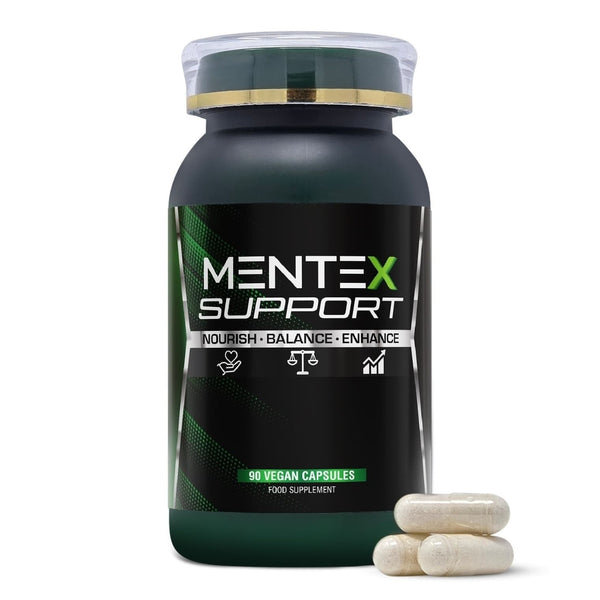
Support
Cognitive performance
11 standardised nootropic actives. Stim-free. Built for focus, recall and mental stamina.
- Focus and clarity, without the jitters
- Memory, recall and faster learning
- Calm, caffeine-free mental energy
£39.99
Explore Support
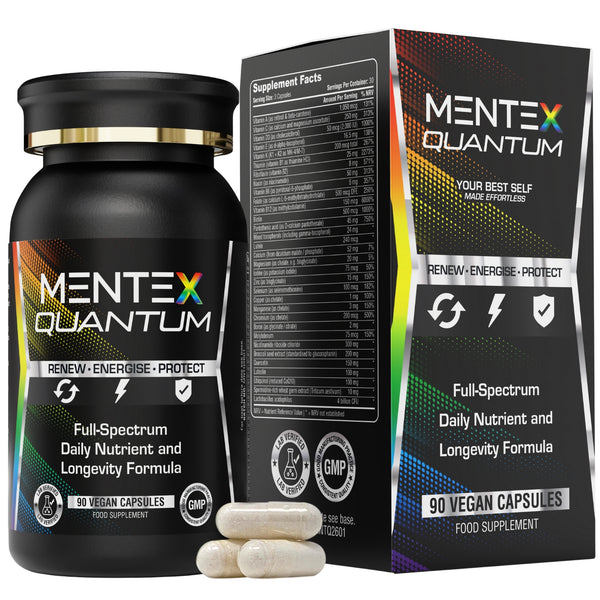
Quantum
Daily nutrition
A comprehensive multivitamin plus specialist compounds. 32 actives for a complete daily foundation.
- Energy and everyday vitality
- Immune and cellular support
- Complete daily nutrition, precisely dosed
£34.99
Explore Quantum