Cart
0
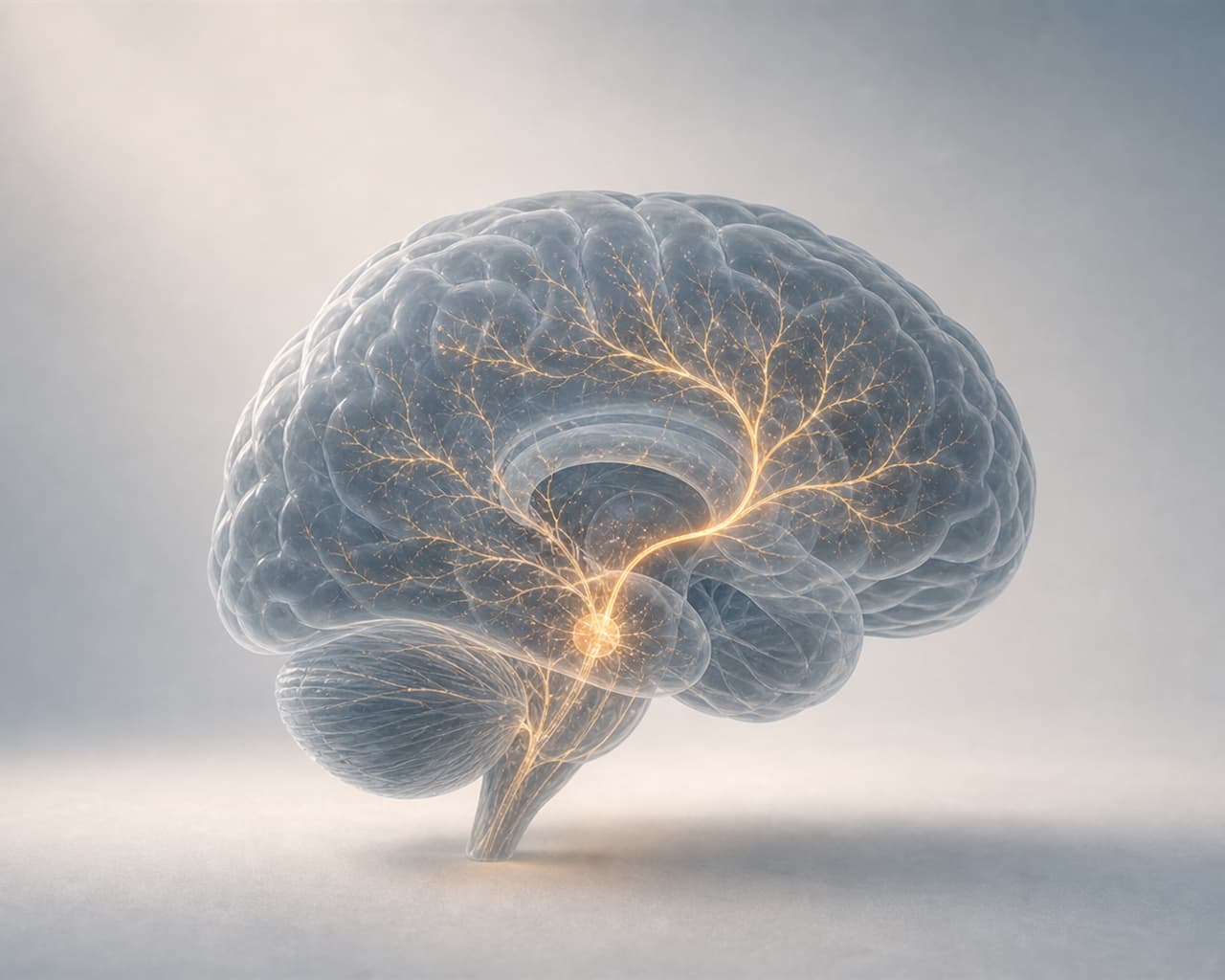
If you have ever bought a supplement promising sharper focus or better memory, there is a good chance it was aimed, directly or indirectly, at a single neurotransmitter. Acetylcholine is the chemical messenger most tightly bound up with the mental functions people most want to improve, which is why choline-based products from citicoline to alpha-GPC all point toward it. Understanding what acetylcholine actually does, and how carefully the brain manages it, is the foundation for making sense of that whole category of supplements. It also sets up an important lesson that the rest of this cluster of articles returns to: acetylcholine sits at the center of a beautifully regulated system, not a simple tank you can top up.
What acetylcholine is and where it comes from
Acetylcholine was the first neurotransmitter ever identified, and it functions in the brain primarily as a neuromodulator, a chemical that adjusts the excitability and responsiveness of large populations of neurons rather than simply passing a single signal from one cell to the next [1]. It is manufactured inside cholinergic neurons from two ingredients, choline and acetyl-CoA, joined together by the enzyme choline acetyltransferase, which is the defining molecular marker of a cholinergic cell [12]. Once released, acetylcholine is broken down with remarkable speed by the enzyme acetylcholinesterase, which hydrolyzes it in the synaptic cleft to switch the signal off almost as soon as it is sent [13]. This rapid on-off cycling is not incidental; it is part of how the system stays precise.
The neurons that make acetylcholine are not scattered randomly. Most of the brain's cortical and hippocampal acetylcholine comes from a compact set of nuclei in the basal forebrain, which act as a central hub sending cholinergic projections outward to the cerebral cortex, the hippocampus, and the amygdala [2]. Careful neuroanatomy in the human brain has mapped organized fiber bundles running from the nucleus basalis of Meynert to the cortex [3], and the standard nomenclature places the cells that feed the hippocampus in the medial septum and those feeding the neocortex and amygdala in the nucleus basalis [12]. This wiring diagram matters because it explains why damage to a small region can degrade cognition across the whole cortex: a great deal depends on a few clusters of cells.
Two kinds of receptors
Acetylcholine speaks through two distinct families of receptors, and the difference shapes its effects. Nicotinic receptors are ionotropic, meaning they open an ion channel directly and act on a fast timescale; they are built from many possible subunit combinations and often sit on nerve terminals where they enhance the release of other neurotransmitters [10]. Muscarinic receptors are metabotropic, working more slowly through intracellular signalling cascades, and come in five subtypes with different roles, several of which are prime targets for drug development in Alzheimer's disease and schizophrenia [11]. Because acetylcholine can act quickly through one system and slowly through the other, it is able to both sharpen moment-to-moment processing and shift the brain's broader operating state [1]. This dual capability is a division of labour rather than a redundancy. Fast nicotinic signalling can gate the release of other transmitters and tune the responsiveness of circuits from moment to moment [10], while slower muscarinic signalling reshapes the activity of whole networks over longer intervals, which is part of why muscarinic subtypes are pursued as drug targets for disorders of cognition [11]. A single neurotransmitter acting through two receptor systems can therefore adjust both the sharpness of an individual response and the overall state the brain is operating in, and cognition leans on both at once.
Acetylcholine and attention
The link between acetylcholine and attention is one of the best-supported ideas in cognitive neuroscience. The classic view held that cortical acetylcholine set a general level of arousal, and there is truth in that, but the modern picture is more precise. Fast, phasic bursts of acetylcholine release, on the scale of seconds, appear to signal the detection of behaviourally significant cues, effectively flagging to the cortex that something worth attending to has appeared [4]. A long line of work has argued that cortical acetylcholine modulates the general efficacy of information processing, with damage to cortical cholinergic inputs impairing sustained and cross-modal attention in particular [6]. Reviews of the animal and human literature converge on a role for acetylcholine in attentional effort, orienting, and the detection of important stimuli [5]. When people describe wanting to improve focus, they are describing, in physiological terms, the work this cholinergic attention system does.
Acetylcholine and learning and memory
Acetylcholine is equally central to how memories are formed. One influential account holds that acetylcholine acts as a kind of learning signal that biases neural circuits toward encoding new information rather than retrieving old, with both muscarinic and nicotinic receptors participating in that shift [7]. The hippocampus, the structure most essential for forming new episodic memories, is densely innervated by cholinergic fibers, and this input is critical for hippocampus-dependent learning [8]. Syntheses of the field have worked to reconcile the slower, state-setting mode of cholinergic function with the faster, cue-detecting mode, showing how the same neurotransmitter can support both the general readiness to learn and the specific encoding of individual experiences [9]. In short, acetylcholine helps decide both when the brain is in a learning state and which moments get written down.
The evidence from disruption and disease
Some of the most compelling evidence for acetylcholine's importance comes from what happens when it is blocked or lost. The drug scopolamine, which blocks muscarinic receptors, is the standard pharmacological tool for inducing cognitive impairment in research, reliably producing deficits in attention and memory that have made it a reference model for decades [15]. Turning the same observation toward aging, a landmark hypothesis proposed that a decline in cholinergic function underlies age-related memory dysfunction, noting that cholinergic deficits appear in aged and demented brains, correlate with memory loss, can be mimicked in young people by cholinergic blockade, and can be partly reversed by cholinergic stimulation [14]. That framework has aged reasonably well. A comprehensive modern review places the cholinergic system firmly at the center of Alzheimer's disease pathophysiology, given the density of cholinergic synapses in memory-related regions and the degeneration of these neurons in the disease [16]. It is no coincidence that the first approved Alzheimer's medications were cholinesterase inhibitors, drugs that slow the breakdown of acetylcholine and thereby raise its levels at the synapse, producing modest cognitive benefits.
Built, released, and cleared on demand
It is worth appreciating how many controlled steps stand between a molecule of choline and a useful cognitive effect. Acetylcholine is assembled from choline and acetyl-CoA by choline acetyltransferase, the enzyme that defines a cholinergic neuron [12], then packaged, released when the cell fires, and almost immediately broken down by acetylcholinesterase so that one signal does not blur into the next [13]. That rapid clearance is not a flaw to be overcome but a feature that keeps cholinergic signalling precise, which is why the drugs that produce measurable clinical effects are the ones that slow the breakdown enzyme rather than the ones that add more raw material [16]. The lesson embedded in this machinery is that acetylcholine output is governed by the activity and regulation of the neurons that make it, not simply by how much choline happens to be on hand. A brain awash in choline still releases acetylcholine only where and when its circuits call for it, and that regulation is the reason cholinergic effects are shaped by demand rather than by supply alone.
Why this matters for supplements, and what comes next
Assemble these threads and the appeal of the whole choline-supplement category becomes obvious. Acetylcholine underlies attention, learning, and memory; it depends on an adequate supply of choline as a building block; and boosting cholinergic signalling has genuine, if modest, cognitive effects in clinical populations. From there it is a short and intuitive leap to the idea that supplying more choline precursor might sharpen a healthy mind. That intuition is not absurd, and it is exactly why compounds like citicoline and alpha-GPC exist and are studied.
The catch, which the companion articles in this series examine in detail, is that acetylcholine is produced and released by a system built to regulate itself. The enzyme that makes it, the enzyme that destroys it, the transporters that recover choline, and the receptors that respond to it are all subject to control, and the rate at which neurons synthesize acetylcholine is not governed by choline supply alone. Understanding acetylcholine as this tightly managed system, rather than as a level to be pushed ever higher, is what separates a realistic view of cholinergic supplements from an inflated one. The neurotransmitter is genuinely central to the mind's most prized functions. What that centrality does not guarantee is that more of its precursor will straightforwardly translate into more of the outcomes you want, and the difference between those two claims is where the interesting science lives.
References
[1] Picciotto, M. R., Higley, M. J., & Mineur, Y. S. (2012). Acetylcholine as a neuromodulator: cholinergic signaling shapes nervous system function and behavior. Neuron, 76(1), 116–129. https://doi.org/10.1016/j.neuron.2012.08.036
[2] Ballinger, E. C., Ananth, M., Talmage, D. A., & Role, L. W. (2016). Basal forebrain cholinergic circuits and signaling in cognition and cognitive decline. Neuron, 91(6), 1199–1218. https://doi.org/10.1016/j.neuron.2016.09.006
[3] Selden, N. R., Gitelman, D. R., Salamon-Murayama, N., Parrish, T. B., & Mesulam, M. M. (1998). Trajectories of cholinergic pathways within the cerebral hemispheres of the human brain. Brain, 121(12), 2249–2257. https://doi.org/10.1093/brain/121.12.2249
[4] Sarter, M., Parikh, V., & Howe, W. M. (2009). Phasic acetylcholine release and the volume transmission hypothesis: time to move on. Nature Reviews Neuroscience, 10(5), 383–390. https://doi.org/10.1038/nrn2635
[5] Klinkenberg, I., Sambeth, A., & Blokland, A. (2011). Acetylcholine and attention. Behavioural Brain Research, 221(2), 430–442. https://doi.org/10.1016/j.bbr.2010.11.033
[6] Sarter, M., & Bruno, J. P. (1997). Cognitive functions of cortical acetylcholine: toward a unifying hypothesis. Brain Research Reviews, 23(1–2), 28–46. https://doi.org/10.1016/S0165-0173(96)00009-4
[7] Hasselmo, M. E. (2006). The role of acetylcholine in learning and memory. Current Opinion in Neurobiology, 16(6), 710–715. https://doi.org/10.1016/j.conb.2006.09.002
[8] Haam, J., & Yakel, J. L. (2017). Cholinergic modulation of the hippocampal region and memory function. Journal of Neurochemistry, 142(Suppl 2), 111–121. https://doi.org/10.1111/jnc.14052
[9] Hasselmo, M. E., & Sarter, M. (2011). Modes and models of forebrain cholinergic neuromodulation of cognition. Neuropsychopharmacology, 36(1), 52–73. https://doi.org/10.1038/npp.2010.104
[10] Dani, J. A., & Bertrand, D. (2007). Nicotinic acetylcholine receptors and nicotinic cholinergic mechanisms of the central nervous system. Annual Review of Pharmacology and Toxicology, 47, 699–729. https://doi.org/10.1146/annurev.pharmtox.47.120505.105214
[11] Kruse, A. C., Kobilka, B. K., Gautam, D., Sexton, P. M., Christopoulos, A., & Wess, J. (2014). Muscarinic acetylcholine receptors: novel opportunities for drug development. Nature Reviews Drug Discovery, 13(7), 549–560. https://doi.org/10.1038/nrd4295
[12] Oda, Y. (1999). Choline acetyltransferase: the structure, distribution and pathologic changes in the central nervous system. Pathology International, 49(11), 921–937. https://doi.org/10.1046/j.1440-1827.1999.00977.x
[13] Soreq, H., & Seidman, S. (2001). Acetylcholinesterase: new roles for an old actor. Nature Reviews Neuroscience, 2(4), 294–302. https://doi.org/10.1038/35067589
[14] Bartus, R. T., Dean, R. L., Beer, B., & Lippa, A. S. (1982). The cholinergic hypothesis of geriatric memory dysfunction. Science, 217(4558), 408–414. https://doi.org/10.1126/science.7046051
[15] Klinkenberg, I., & Blokland, A. (2010). The validity of scopolamine as a pharmacological model for cognitive impairment: a review of animal behavioral studies. Neuroscience & Biobehavioral Reviews, 34(8), 1307–1350. https://doi.org/10.1016/j.neubiorev.2010.04.001
[16] Hampel, H., Mesulam, M. M., Cuello, A. C., Farlow, M. R., Giacobini, E., Grossberg, G. T., et al. (2018). The cholinergic system in the pathophysiology and treatment of Alzheimer's disease. Brain, 141(7), 1917–1933. https://doi.org/10.1093/brain/awy132